Selling Techniques That Actually Work Today
Modern buyers don’t need a stronger pitch. They need a trusted guide.
Many buyers don’t trust salespeople the way they used to — and by the time you speak with them, they may already believe they know the answer or have been confused by claims from other vendors.
If that sounds familiar, you’re not alone.
Even good B2B salespeople are running into buyers who are researched-up, cautious, skeptical, and convinced they already know what matters.
So if your close rate has been slipping, it may not mean you have lost your edge.
It may mean buyers have changed.
The problem is not your effort.
The problem is the new psychology of how buyers think, defend their choices, protect themselves from risk, and avoid being “sold to.”
When buyers are already skeptical, traditional persuasion techniques can sometimes make the problem worse.
The harder you push, the more they protect themselves.
That is why modern selling has to start somewhere different.
Not with the pitch.
Not with the close.
But with the buyer’s decision process.
Buyer-Responsive Selling helps experienced B2B salespeople earn trust, create clarity, reduce buyer uncertainty, and help cautious buyers move forward with confidence.
You haven't lost your edge — buyers have just changed
Selling has changed because buying has changed.
Today’s buyers are dealing with a confluence of forces that make decisions harder than they used to be.
They have:
- more information.
- more competing claims.
- more vendors saying similar things.
- more internal opinions to consider.
- more risk if they get the decision wrong.
- less automatic trust in sales messages.
And more ways to research, compare, check, question, and delay before making a decision.
They can read reviews, compare alternatives, ask AI, talk to colleagues, involve finance, check competitors, and gather opinions long before they are ready to act.
But more information has not always made buying easier.
In many cases, it has made buyers more cautious, more skeptical, and more afraid of making the wrong decision.
That is why a buyer can be interested and still hesitate.
They may:
- like your product.
- see the value.
- even believe you can help.
But they still ask for more information.
They still:
- delay.
- go quiet.
- raise objections.
Or they leave a conversation interested, but nothing happens because they cannot get agreement from other people inside their own organisation.
That does not always mean the buyer is not interested.
It may mean they are not yet clear enough, trusting enough, certain enough, or internally supported enough to move forward.
Why are your B2B sales conversations stalling?
Take the short diagnostic and find out whether the issue is trust, clarity, buyer uncertainty, or internal alignment.
Old-school persuasion is no longer enough
Traditional persuasion techniques were often built around presenting strongly, handling objections, and closing harder.
Those skills can still matter.
But they are no longer enough by themselves.
Modern buyers are:
- more defended.
- more alert to pressure.
- more skeptical of claims.
And they are often trying to protect themselves from making a decision they may later regret.
So the salesperson’s role has to change.
The question is no longer only:
“How do I persuade this buyer?”
The better question is:
“What does this buyer need to understand, trust, clarify, resolve, and feel confident about before they can move forward?”
That is the shift from pushing the sale to guiding the decision.
Introducing Buyer-Responsive Selling
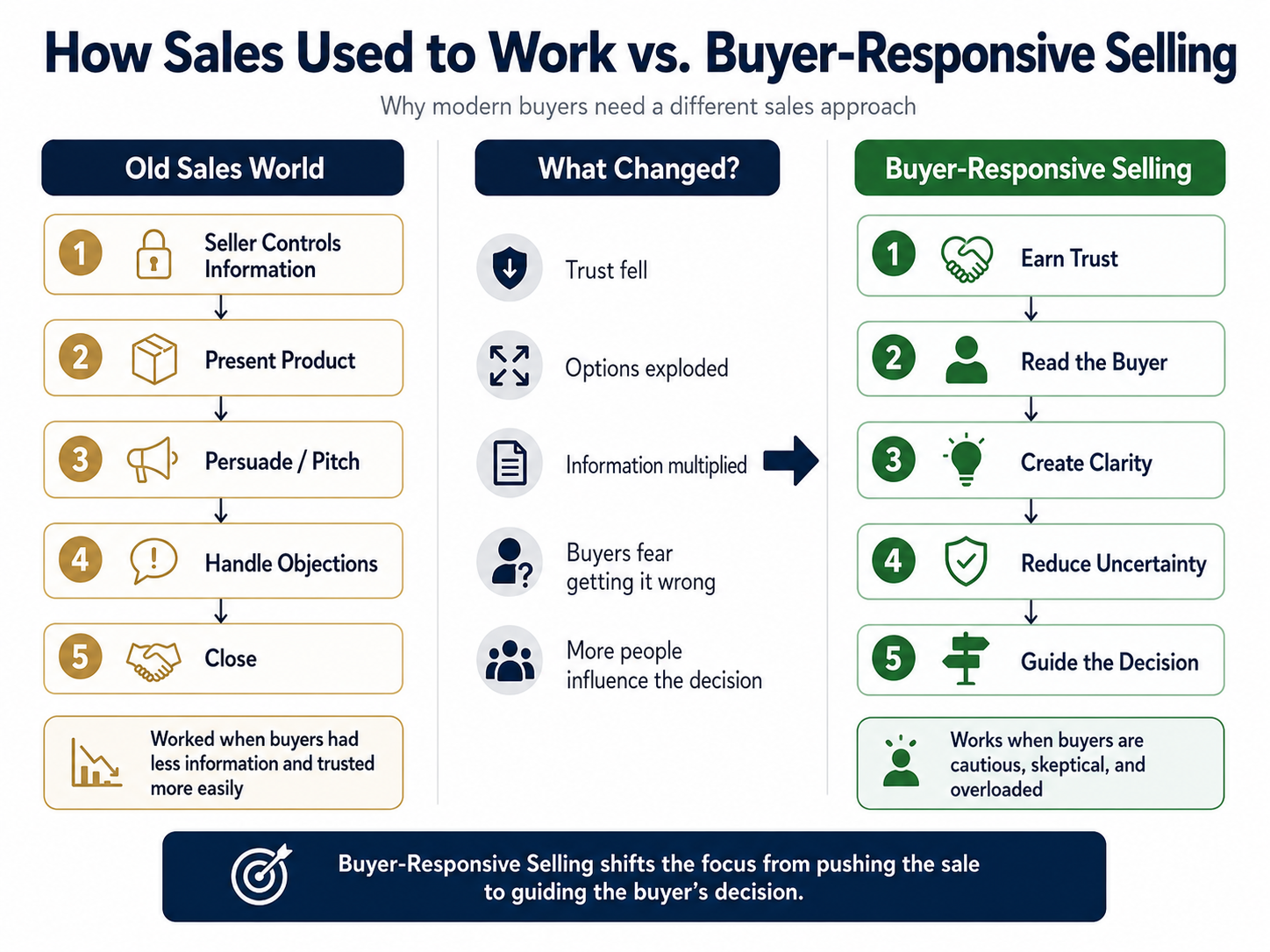
Buyer-Responsive Selling is my approach to helping experienced B2B salespeople respond to the way modern buyers actually decide.
It is not about manipulating the buyer.
It is not about using clever scripts to force agreement.
And it is not simply about being helpful, friendly, or flexible.
Buyer-Responsive Selling means adapting the sales conversation to the buyer’s trust, clarity, motivation, risk, and internal decision needs, so they can move toward a decision they can believe in.
In simple terms:
Modern buyers don’t need a stronger pitch. They need a trusted guide who helps them make sense of the decision.
That trusted guide knows how to:
- earn trust
- read the buyer
- ask better questions
- create clarity
- reduce uncertainty
- handle objections without pushing
- help the buyer think through the decision
That is what Buyer-Responsive Selling is designed to do.
I was sometimes regarded as a “weak” salesperson because I wasn’t pushy.
The problem was, I was making considerably more sales than most of the other salespeople around me.
I listened. I noticed. I tried to understand the buyer, their business and what was really happening in the conversation. I paid close attention to the language I used and the language the buyer used.
That experience is one of the foundations of Buyer-Responsive Selling.
You don’t have to become more pushy to become more successful. You have to become better at understanding and responding to the buyer.
Start with Buyer-Responsive Selling
What changes when you understand how buyers really decide
When you understand what is happening inside the buyer’s decision process, selling becomes calmer and more useful.
You stop treating every delay as rejection.
You stop treating every objection as resistance.
You stop assuming that interest automatically means readiness.
Instead, you begin to ask better questions.
What does this buyer need to trust?
What are they still unclear about?
What risk are they trying to avoid?
What matters most to them?
Who else needs to support the decision?
What would make this decision easier to believe in, justify, and act on?
That changes the conversation.
You stop trying to force the sale forward.
You start helping the buyer move forward with more clarity and confidence.
Explore the main sales topics
This site is gradually being organised around the Buyer-Responsive Selling framework.
Some articles were originally written as standalone sales topics. But they now fit into a larger system for helping modern buyers move from hesitation to confidence.
You can explore topics such as by clicking the Sell More tab above:
- Sales thinking
- Trust and rapport
- Understanding how buyers think
- Sales questions
- Sales language and framing
- Objection handling
- Ethical persuasion
- Buyer uncertainty and decision confidence
Each topic helps answer the same bigger question:
How do you help modern buyers become clear enough, confident enough, and trusting enough to move forward?
What this can look like in practice
Tom was an experienced salesperson.
He was not lazy.
He was not new.
He was not lacking product knowledge.
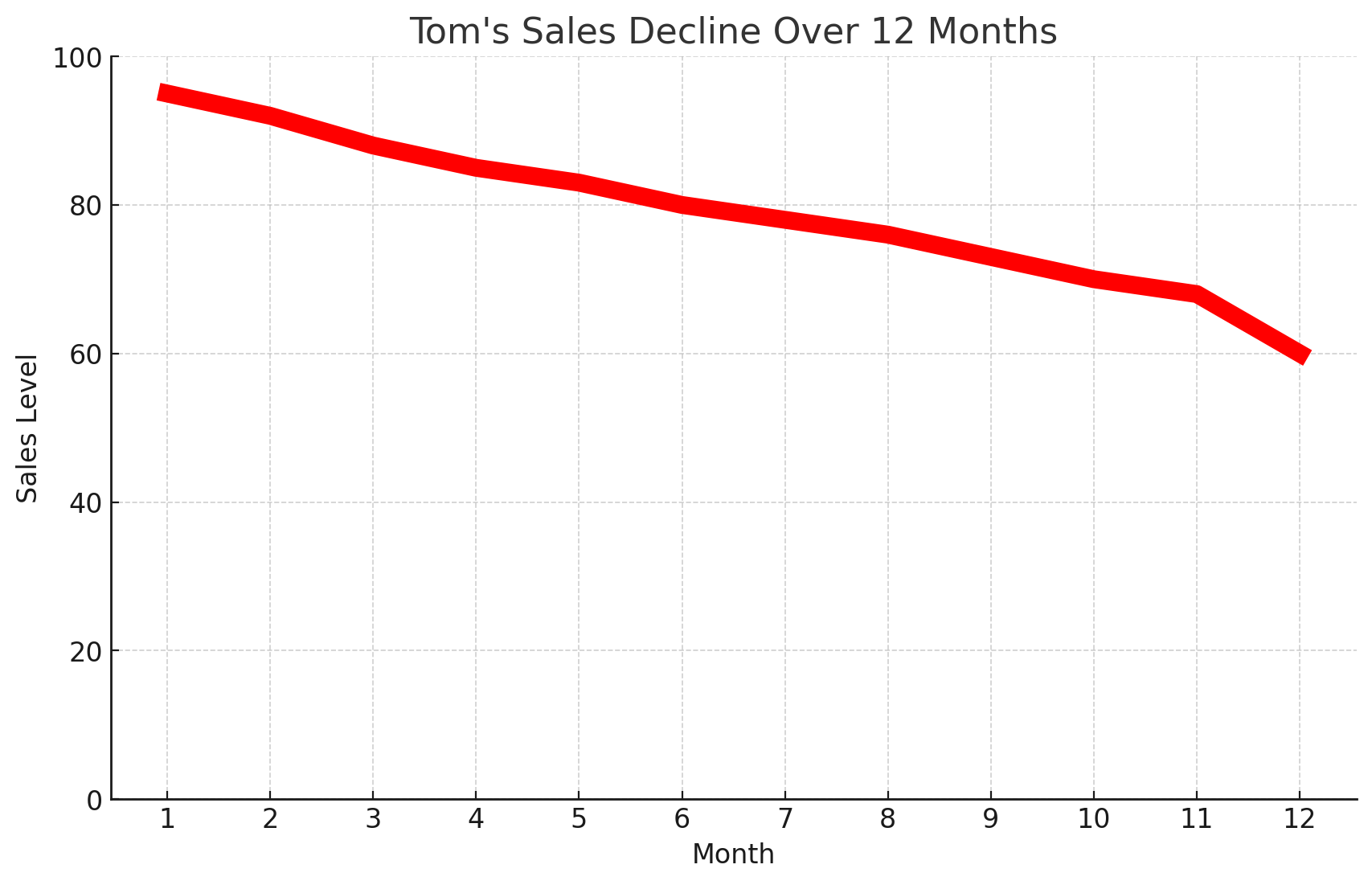
But his results started to fall because the buying environment had changed.
His buyers had changed — faster than his selling approach could keep up.
The techniques that once helped him move sales forward were no longer enough for buyers who were cautious, skeptical, researched-up, and afraid of making the wrong decision.
Tom’s story shows what can happen when an experienced salesperson stops trying to push harder and starts learning how to guide the buyer with more trust, clarity, and confidence.
Start with Buyer-Responsive Selling
If your sales conversations are stalling, the answer may not be more pressure, more hype, or another closing technique.
The better starting point is understanding why modern buyers hesitate.
Buyer-Responsive Selling gives you a practical way to earn trust, create clarity, reduce uncertainty, and help buyers move toward decisions they can believe in.
Because modern buyers do not need a stronger pitch.
They need a trusted guide.